Chapter one
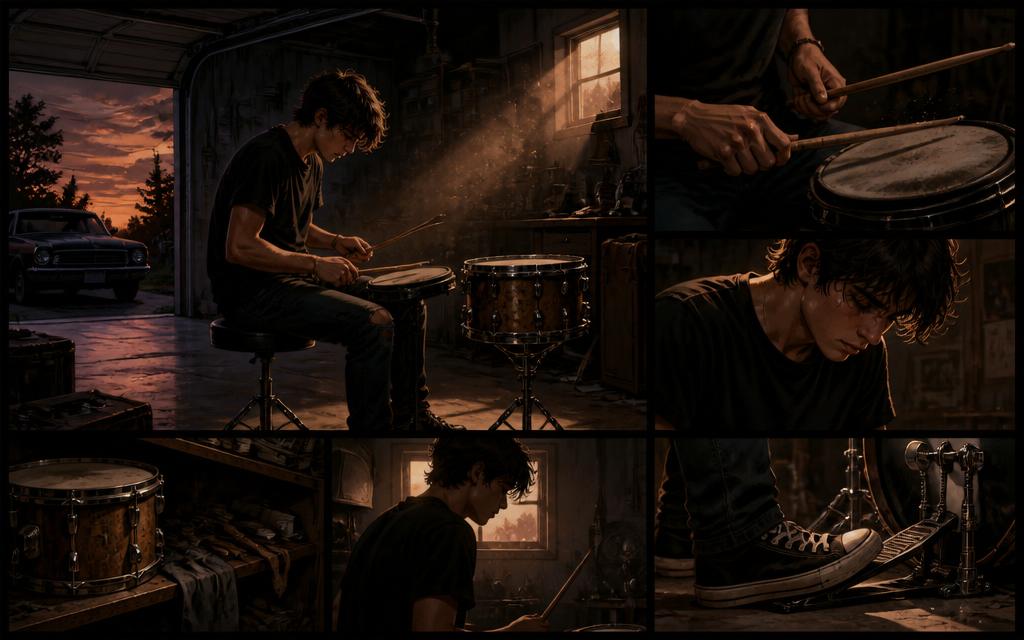
Garage
One pad, one lamp, one pair of sticks. Nobody is listening yet — and that is exactly the point. Every drummer you admire started in a room like this.
Your story
Every chapter unlocks with XP earned in practice, jams and games. Between chapters, we honor the drummers who wrote the book.
Garage
0 XPYou've reached the final chapter.
Chapter one
Garage
One pad, one lamp, one pair of sticks. Nobody is listening yet — and that is exactly the point. Every drummer you admire started in a room like this.
Chapter two
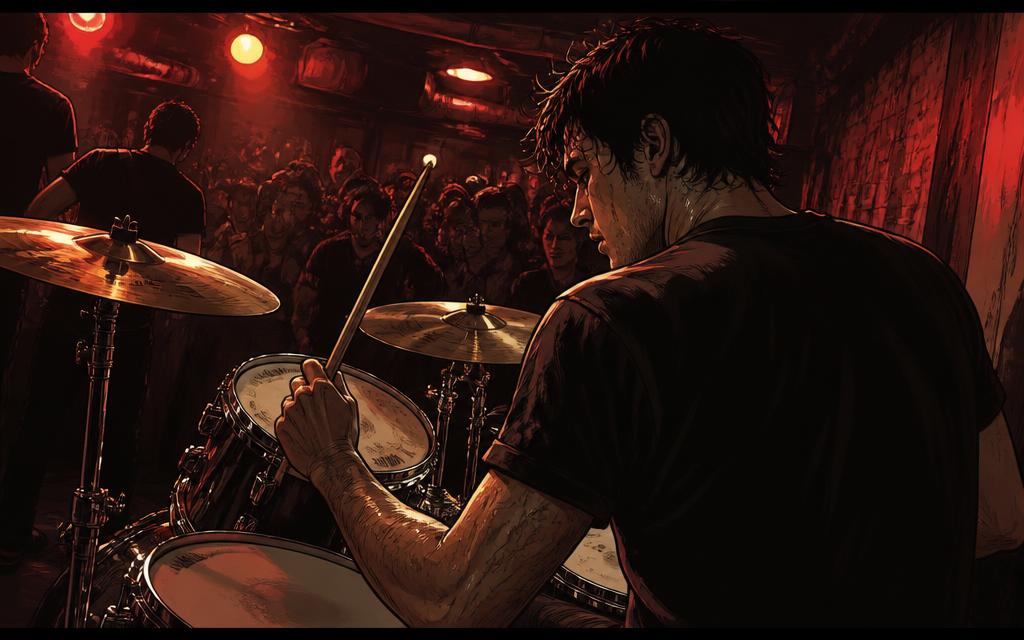
Basement Club
Keep playing to reveal this chapter.
Chapter three
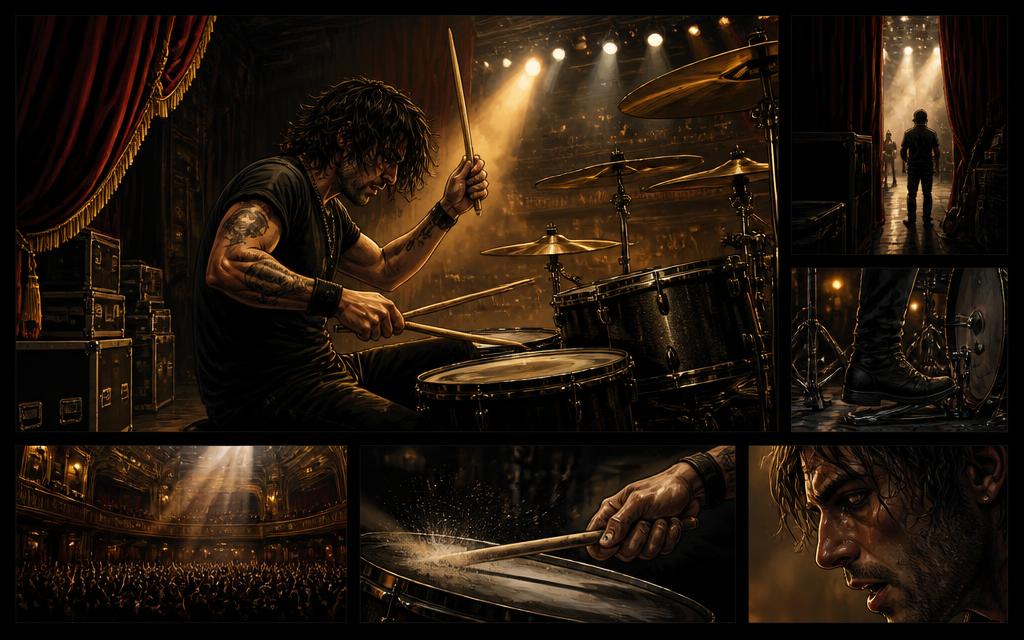
Theater
Keep playing to reveal this chapter.
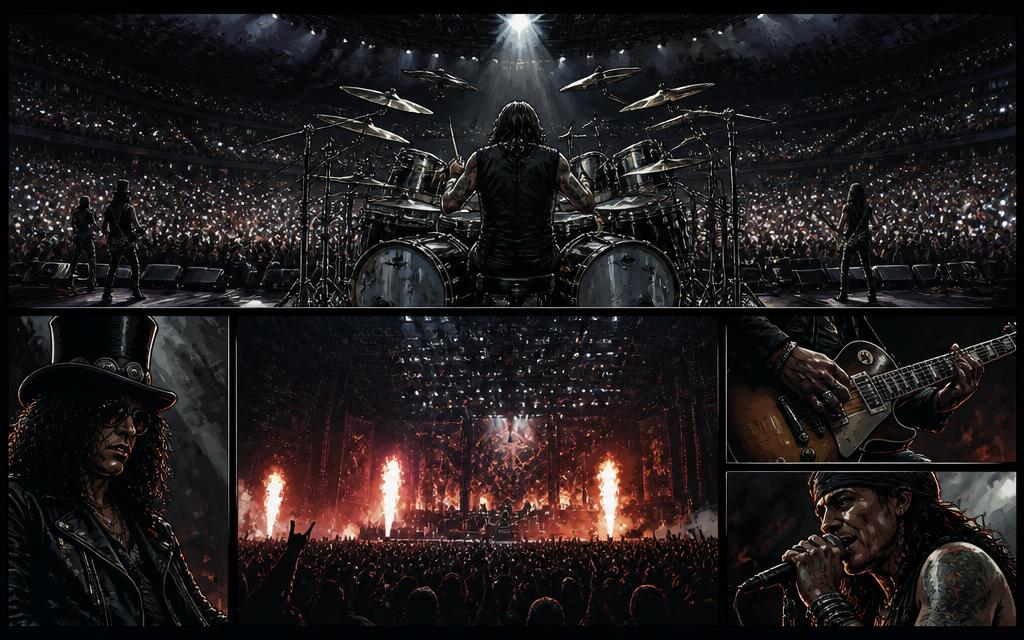
Chapter four
Arena
Keep playing to reveal this chapter.
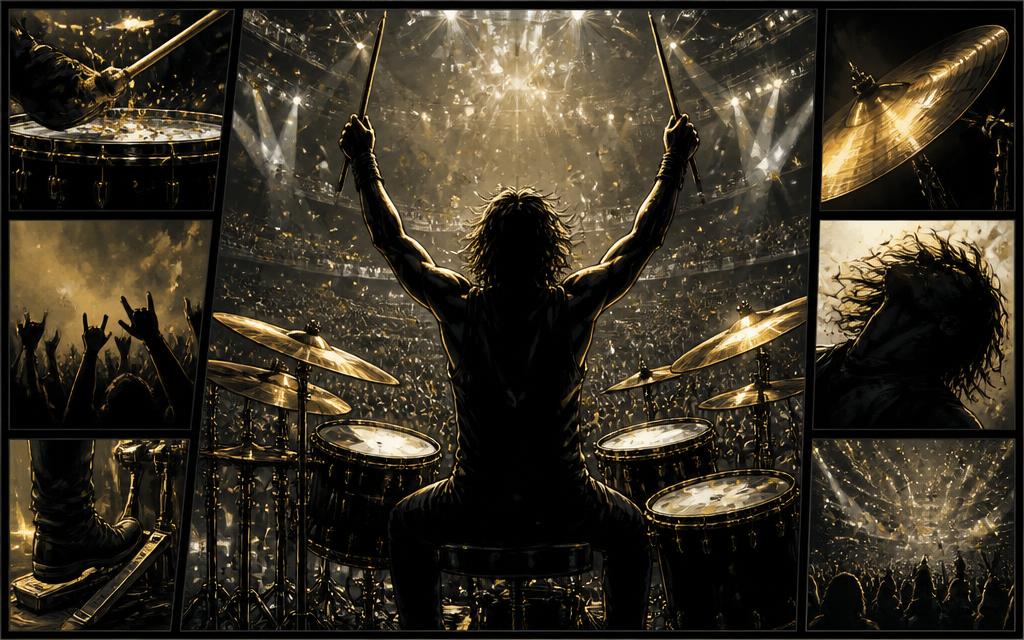
Final chapter
Legend
Keep playing to reveal this chapter.
Drum legends
Prince / solo · 1976–now
Percussionist, drummer, bandleader
Sheila E. was gigging professionally at 15, became Prince's musical director, and plays timbales and full kit at a level most players only manage on one of the two.
Take it to the kit — Hand percussion sharpens kit playing — your hands learn dynamics the pedals can't teach.
Led Zeppelin
The loudest three limbs in rock. Bonham played a single bass drum but was routinely accused of using two. His right foot could fire triplets fast enough that engineers had to move mics further back just to stop the kick from swamping the whole record.
Power is timing plus relaxation — not tension. Play from the ankle and wrist, not the shoulder.
The Who
The drummer who played lead. Moon almost never played a plain backbeat. He treated the kit like a lead instrument, filling constantly around Townshend's guitar — and famously kept his tom fills going straight through the vocals.
Rules exist so you know what you're breaking. Learn the backbeat before you abandon it.
Big band / jazz
On stage at eighteen months old. Billed as 'Traps, the Drum Wonder', Buddy Rich was performing in vaudeville as a toddler and was one of the highest-paid child stars in the world by age seven. He never took a formal drum lesson in his life.
Hands before gear. His speed came from a relentless single-stroke roll, practised for decades.
Session legend
The most recorded drummer alive. Purdie has played on thousands of sessions — Aretha Franklin, Steely Dan, James Brown — and invented the 'Purdie Shuffle', a half-time shuffle with ghost notes so slippery that Bonham and Jeff Porcaro both built famous songs on it.
Ghost notes are the secret sauce. Quiet strokes between the loud ones create the groove.
Toto
Three grooves stitched into one. The famous 'Rosanna' shuffle is Porcaro's blend of Purdie's shuffle, Bonham's 'Fool in the Rain' and a Bo Diddley feel — a hybrid so difficult that drummers still study it note-for-note decades later.
Steal from three heroes at once and you end up sounding like yourself.
Rush
Went back to school at 42. Already voted one of the greatest drummers alive, Peart tore his technique down and rebuilt it from scratch under jazz teacher Freddie Gruber — relearning how to hold a stick after 20 years of arena tours.
No one is ever finished. Rebuilding fundamentals is a pro move, not a beginner move.
John Coltrane Quartet
He made time feel round. Jones played rolling triplet waves across the whole kit instead of marking the beat, so the pulse felt implied rather than stated. Coltrane's most adventurous music only holds together because of that elastic time.
Time can breathe. Feel the bar, not just the click.
Prince / solo
Percussionist, drummer, bandleader. Sheila E. was gigging professionally at 15, became Prince's musical director, and plays timbales and full kit at a level most players only manage on one of the two.
Hand percussion sharpens kit playing — your hands learn dynamics the pedals can't teach.
Nirvana / Foo Fighters
He hit so hard he changed the mix. Grohl's audition for Nirvana lasted one song. His attack was so heavy that producers stopped compressing his snare — the raw crack you hear on 'Nevermind' is essentially him hitting the drum as hard as a human can.
Commit to every stroke. Half-hearted hits sound half-hearted, at any volume.
The Beatles
A left-hander on a right-handed kit. Ringo is left-handed but plays a right-handed setup, so his fills fall around the kit 'backwards'. That awkwardness is exactly why his fills sound like nobody else's — and why they're so hard to copy.
Your limitations become your signature if you keep playing through them.
Frank Zappa / session
Sight-read the unplayable. At his Zappa audition Colaiuta read a chart of impossible mixed meters at sight — then played it with a groove. He was 21.
Reading is a superpower. Even basic notation doubles what you can learn from a page.
Miles Davis Quintet
Hired by Miles Davis at 17. Still a teenager, Williams reinvented jazz timekeeping by moving the pulse to the hi-hat and playing the ride with startling freedom — then went on to help invent fusion.
Age is irrelevant. Ears and conviction are what get you hired.